Physical Address
304 North Cardinal St.
Dorchester Center, MA 02124
Physical Address
304 North Cardinal St.
Dorchester Center, MA 02124

Your Guide to the Latest in Tech
Your Guide to the Latest in Tech
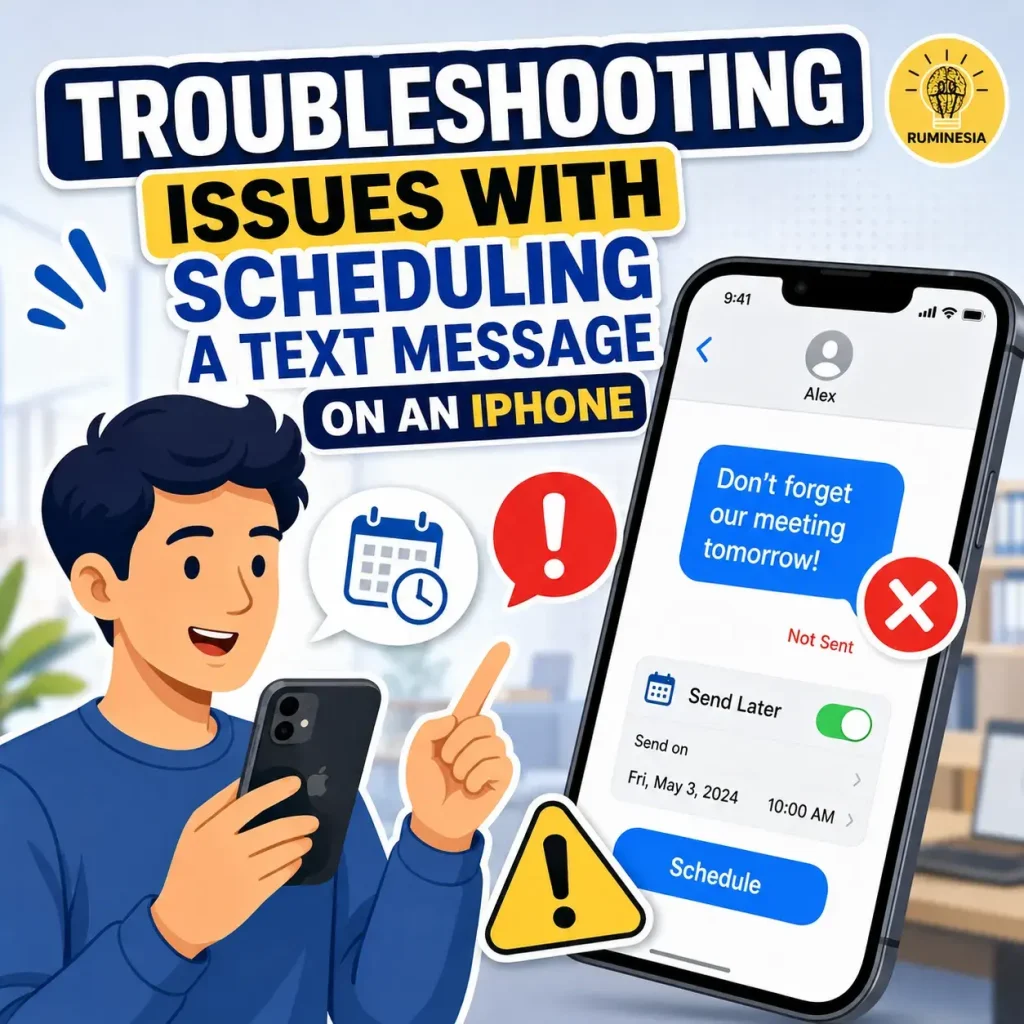
Ruminesia – Have you ever scheduled a text message on your iPhone, only to discover later that it never went out? It can be frustrating when a message meant for a meeting reminder, birthday greeting, or important follow-up simply doesn’t arrive as planned. That’s often when users start searching for answers to troubleshooting issues with scheduling a text message on an iPhone.
Interestingly, the problem isn’t always caused by a software bug. Sometimes it’s a small setting, a missed requirement, or a connectivity issue working quietly in the background. What makes it confusing is that everything can appear normal until the scheduled send time passes.
If you’ve been wondering why your scheduled messages aren’t behaving as expected, you’re not alone. Understanding what happens behind the scenes can make troubleshooting much easier and help you avoid the same issue in the future.
Key Highlights
- Most scheduling issues stem from settings, connectivity, or software requirements.
- Scheduled messages only work in iMessage conversations with blue message bubbles.
- Keeping iOS updated ensures access to the latest messaging features.
- Incorrect date and time settings can disrupt scheduled message delivery.
- Your iPhone must stay powered on until the scheduled send time.
- Messages in iCloud helps keep scheduled texts synchronized across devices.
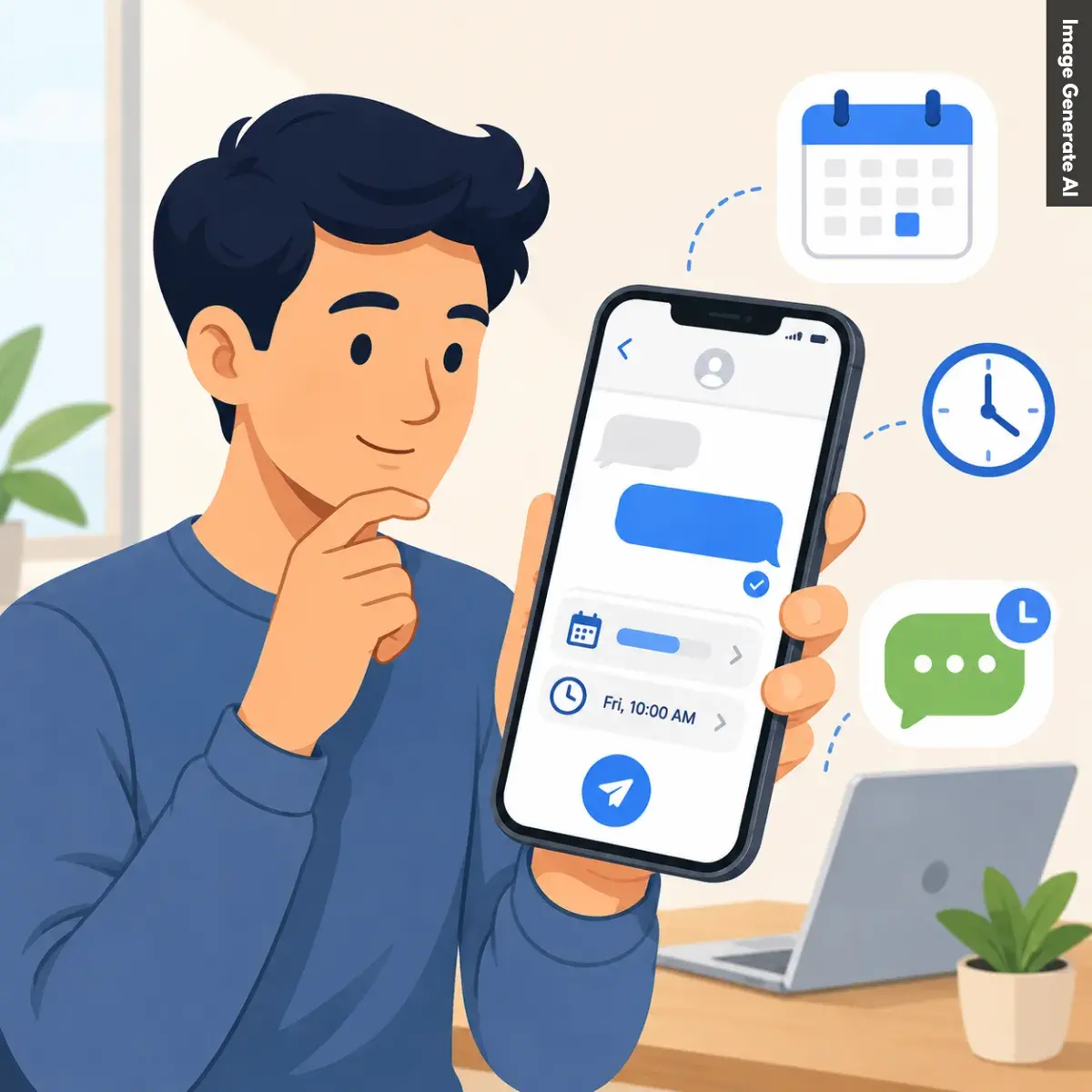
The ability to schedule text messages on iPhone can be a real time-saver, especially for reminders, business communication, or messages that need perfect timing.
However, when the feature doesn’t work as expected, it can quickly become frustrating. That’s where troubleshooting issues with scheduling a text message on an iPhone can help you identify and fix common issues before they disrupt your plans.
A reliable internet connection is essential for iMessage scheduling to work properly.
In practice, temporary network interruptions are one of the most common reasons scheduled messages fail to send on time.
Sometimes the issue is simply an incorrect schedule.
What many users don’t realize is that even a small scheduling mistake can make it seem like the feature isn’t working when the message is actually set for a different time.
The Send Later feature is only available on iOS 18 and newer versions.
If you don’t see the scheduling option in Messages, an outdated iOS version is often the first thing worth checking.
Scheduled sending currently works only with iMessage chats.
This limitation catches many users by surprise, especially when switching between iMessage and regular text conversations.
Your iPhone must remain powered on until the scheduled message is sent.
Interestingly, a scheduled message may not send as expected if the device is powered off when the delivery time arrives.
Accurate system time plays a bigger role than many people realize.
Incorrect date or time settings can interfere with message scheduling and cause unexpected delivery issues.
Enabling Messages in iCloud helps keep your conversations and scheduled texts synchronized across Apple devices.
Besides keeping everything in sync, this setting can help prevent missing schedules or inconsistencies when you use multiple Apple devices throughout the day.
Read Also:
If you’re looking for quick answers about iPhone features, settings, and troubleshooting, this FAQ covers the questions users ask most often. These Frequently Asked Questions About iPhone provide practical solutions that are easy to follow.
If your iPhone is frozen and not responding, you can force restart it using the hardware buttons. Press and quickly release the Volume Up button, then press and quickly release the Volume Down button. After that, press and hold the Side button until the Apple logo appears.
This process does not delete your data. It simply forces the device to restart and is often the fastest way to resolve temporary software issues.
Sudden battery drain is usually caused by background app activity, recent iOS updates, high screen brightness, or location services running continuously. In some cases, your iPhone may also be indexing data after a software update. To identify the cause:
The quickest way to free up storage is to review what’s using the most space. You can find this information in Settings > General > iPhone Storage. Useful ways to clear storage include:
The main difference is that iPhone Pro models offer more advanced features. They typically include better cameras, higher-performance chips, premium materials, and ProMotion displays with smoother scrolling.
Standard iPhone models focus on everyday performance and affordability. For most users, they provide excellent performance, while Pro models are designed for photography enthusiasts, gamers, and content creators.
The easiest way is to use iCloud Backup. Once enabled, your iPhone automatically backs up important data when connected to Wi-Fi, charging, and locked. You can also create a local encrypted backup:
Apple’s Quick Start feature makes transferring data simple. Place your new iPhone near your old one and follow the on-screen instructions. Basic steps:
The process moves apps, photos, settings, and most personal data automatically.
Yes, modern iPhones are designed to handle overnight charging safely. Once the battery reaches full charge, the charging system automatically manages power delivery.
One thing many users overlook is the Optimized Battery Charging feature. When enabled, it learns your charging habits and helps reduce long-term battery wear.
You can reduce unwanted calls using the built-in Silence Unknown Callers feature. This automatically sends calls from unknown numbers to voicemail. To enable it:
For additional protection, consider using a trusted caller ID and spam-filtering app.
If your iPhone gets wet, act quickly to minimize potential damage. Turn the device off immediately and gently dry the exterior with a soft cloth. Follow these steps:
Do not place the device in rice, as small particles can enter the ports and cause additional problems.
You can disable location tracking through the Privacy settings. This gives you more control over how apps access your location data. To turn it off:
Alternatively, you can manage location access individually for each app, which is often the most practical option for balancing privacy and convenience.
Scheduled messaging is designed to make communication easier, but when something goes wrong, it can quickly become confusing. The good news is that most problems are usually tied to simple settings, connectivity issues, or device requirements rather than major technical failures. That’s why understanding the basics of troubleshooting issues with scheduling a text message on an iPhone can save both time and frustration.
Interestingly, features that seem automatic often rely on several small details working together behind the scenes. A stable internet connection, the correct time settings, and an updated device may not seem important at first, but they can make all the difference when a scheduled message is expected to arrive at the right moment.
Maybe you’ve experienced a scheduled message that was never sent or arrived later than expected. If so, you’re certainly not alone. Have you encountered any other scheduling issues on your iPhone, or found a solution that worked particularly well for you?