Physical Address
304 North Cardinal St.
Dorchester Center, MA 02124
Physical Address
304 North Cardinal St.
Dorchester Center, MA 02124

Your Guide to the Latest in Tech
Your Guide to the Latest in Tech

ruminesia – Have you ever started Yu Gi Oh Forbidden Memories thinking you could build a strong deck simply by collecting powerful monsters? The game quickly proves otherwise, especially when early duels start exposing how different its rules are from modern Yu-Gi-Oh.
That is where a Yu Gi Oh Forbidden Memories Beginner Guide becomes useful. The real challenge is not just finding cards with high ATK, but understanding Fusion, Guardian Stars, card farming, and which early combinations can carry you forward.
Once those systems start making sense, the game feels much less random. You begin to see why some seemingly weak cards are worth keeping, when farming is actually necessary, and how a simple Fusion strategy can turn the first part of the game in your favor.
Key Highlights
- Learn Fusion early, because it matters more than simply collecting high-ATK monsters.
- Build around reliable Fusion combinations instead of filling your deck with random strong cards.
- Use Guardian Stars strategically, since the right matchup can swing an otherwise close duel.
- Farm cards before pushing the story too far, especially when your deck starts feeling underpowered.
- Spend Star Chips carefully on cards that strengthen your Fusion strategy and long-term progression.
- Prepare early for tougher field effects, stronger bosses, and the unforgiving final stretch.
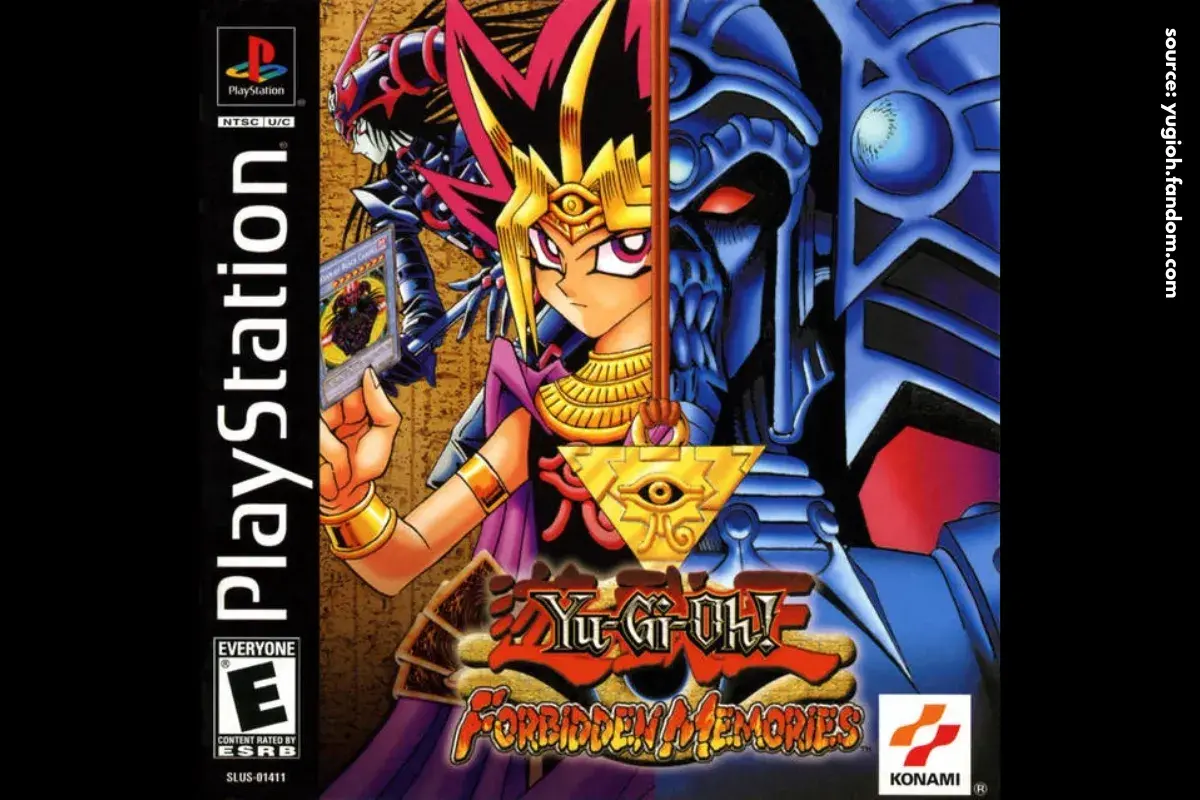
Yu-Gi-Oh! Forbidden Memories looks like a traditional Yu-Gi-Oh! game at first glance. Once you start playing, though, many familiar rules suddenly stop applying. The game rewards Fusion knowledge, careful farming, and a deck built around consistency.
If you come from the modern Yu-Gi-Oh! TCG, the first few duels can feel confusing. Monsters do not need Tributes, Fusion happens directly from your hand, and effects are far less important than raw stats. Understanding these differences early will save you from building your deck around the wrong priorities.
Each player uses a 40-card deck and starts with 8,000 LP. You can usually summon monsters directly, regardless of their Level, so powerful monsters can appear much earlier than expected. That sounds helpful, but your opponents can do the same thing.
The real question is what your opening hand can create together. Instead of looking for one powerful card, look for combinations that consistently produce stronger monsters.
Fusion is probably the most important mechanic to understand in the early game. You can combine compatible cards from your hand or field without needing Polymerization. That makes ordinary monsters useful when they can serve as reliable Fusion materials.
Twin-Headed Thunder Dragon has 2,800 ATK, making it one of the strongest early-game Fusions available. Its basic recipe is Dragon + Thunder, although Fusion requirements can depend on the materials involved. Some useful early Fusions include:
| Materials | Fusion | ATK |
|---|---|---|
| Dragon + Thunder | Twin-Headed Thunder Dragon | 2,800 |
| Beast + Pyro | Flame Cerebrus | 2,100 |
| Female + Rock | Mystical Sand | 2,100 |
| Plant + Zombie | Pumpking the King of Ghosts | 1,800 |
| Dragon + Time Wizard | Thousand Dragon | 2,400 |
The important part is not memorizing every recipe immediately. Build a deck that gives you several chances to reach a strong Fusion whenever you draw your opening hand.
One common beginner mistake is judging cards only by their printed ATK. A weaker monster can be much more useful when it provides access to another Fusion. This is why some low-ATK cards deserve a place in your deck. Think about your cards in stages:
This approach makes your deck more predictable. You are not hoping to draw a powerful monster; you are creating several routes toward one.
Guardian Stars are easy to ignore because the game does not explain them particularly well. Each monster has two stars, and your chosen star can change the outcome of a battle. A favorable matchup gives you +500 ATK and DEF, while a disadvantage gives you -500.
The two cycles are:
| Guardian Star Cycle | Advantage |
|---|---|
| Sun → Moon → Venus → Mercury → Sun | Each star beats the next |
| Mars → Jupiter → Saturn → Uranus → Pluto → Neptune → Mars | Each star beats the next |
This creates situations where a weaker monster can beat something with higher printed ATK. A 2,800 ATK monster, for example, can sometimes challenge a 3,000 ATK monster with the right star advantage.
Before attacking, check both monsters instead of comparing ATK alone. Later opponents become strong enough that this small calculation can make a major difference.
Forbidden Memories expects you to grind, even though the story does not always make that obvious. If you keep progressing with an unchanged starter deck, the difficulty eventually catches up with you.
Free Duel is therefore part of normal progression, not just something for completionists. Early opponents can help you build your card pool:
You do not need to farm until you own everything. Stop when your deck can consistently produce monsters around the 2,100–2,800 ATK range, then return to the story.
Your starter deck is random, so some openings are much more useful than others. If you do not mind restarting, getting a strong starting card can reduce the amount of early grinding required.
Raigeki is especially useful because it destroys the opponent’s monsters without removing your own. A useful Equip card can also make the opening deck considerably stronger.
Look for combinations that support your long-term deck rather than isolated powerful cards. A Dragon, Thunder, and useful Equip can be more valuable than several unrelated high-ATK monsters.
This is optional, not mandatory. If you prefer keeping your original save, you can build the same strategy through normal farming.
Star Chips come from winning duels and can be spent through the Password menu. It is tempting to spend them whenever you see an interesting card. Early on, however, your chips are better used on cards that strengthen your actual deck. Some useful options include:
| Card | Password | Why It Matters |
|---|---|---|
| Jirai Gumo | 94773007 | 2,200 ATK gives you strong early pressure |
| Crawling Dragon #2 | 89717 | Useful Dragon-related Fusion material |
| Skull Red Bird | 1202894 | Useful early monster |
| Mystical Elf | 15025844 | Strong defensive option |
You can also prioritize useful Dragon, Thunder, Equip, and Field cards. The best purchase is not always the strongest card; it is the card that improves your deck most immediately.
Read More:
Duel rankings become important when you start hunting specific card drops. POW and TEC represent different approaches to winning, so changing your playstyle can change the rewards you pursue.
| Ranking Style | General Approach | Best Use |
|---|---|---|
| POW | Fast, aggressive victory | Monster-focused farming |
| TEC | Longer, technical duel | Magic and Trap-focused farming |
For POW, focus on quickly reducing the opponent’s LP and winning through strong attacks. TEC generally requires a more controlled duel, where you use more cards and can eventually exhaust the opponent’s resources.
This matters because farming is not simply about fighting the same opponent repeatedly. You also need to consider how you win the duel and what reward pool you’re targeting.
Equip cards become increasingly important because ATK is one of the strongest resources in this game. A strong Fusion becomes much more dangerous when you can increase its ATK further. Useful examples include:
The exact value depends on which monsters you are using. Dragon-focused decks naturally benefit more from Dragon-related Equips than from cards supporting types you rarely summon.
A good Fusion with the right Equip can carry several duels. That is usually more valuable than filling your deck with several unrelated monsters.
Field Spells can look secondary during the early game. Their importance becomes much clearer when you start fighting stronger opponents, especially the High Mages. Their monsters can benefit heavily from the Field Spell currently active. This means your Field Spell can serve two purposes:
Mountain and Umi are particularly useful depending on your deck. You do not need to build your entire strategy around Field Spells, but having one available can prevent some difficult matchups from becoming even harder.
Later in the campaign, small advantages like this start to matter much more. Strong monsters alone are not always enough when the opponent receives additional field bonuses.
Grinding is necessary, but grinding without a goal wastes time. Before starting another long Free Duel session, decide what your deck actually needs. You might be looking for:
This gives your farming a purpose. Instead of asking, “How many more cards can I get?”, ask, “What card would actually improve my deck?”
That distinction becomes increasingly useful as your collection grows. More cards do not automatically mean a stronger deck.
The early game can become comfortable once you have reliable Fusions. The difficulty rises again when opponents start using much stronger monsters and better support.
Eventually, you will face monsters above 3,000 ATK and even threats such as Gate Guardian and Blue-Eyes Ultimate Dragon. Some useful long-term targets include:
| Card | ATK | Role |
|---|---|---|
| Twin-Headed Thunder Dragon | 2,800 | Reliable early-mid Fusion |
| Red-Eyes B. Dragon | 2,400 | Strong Dragon |
| Blue-Eyes White Dragon | 3,000 | High-ATK monster |
| Meteor Dragon | 1,800 | Fusion material |
| Meteor B. Dragon | 3,500 | Major late-game target |
The goal is not to rush toward every powerful card. Build a deck that can repeatedly create strong monsters, then improve its support as the campaign gets harder.
Saving is especially important before major campaign battles. Losing certain story duels can trigger a Game Over, which makes an avoidable mistake much more frustrating.
Save before difficult encounters, especially after spending time farming. You should also save after obtaining cards that significantly improve your deck.
The final stretch deserves extra caution because several difficult encounters can come close together. Having a prepared save and a reliable deck can save you from repeating a large portion of the game.
The easiest way to understand Forbidden Memories is to stop thinking about it like modern Yu-Gi-Oh!. Your deck is less about archetypes and complicated effects, and more about finding reliable combinations. Strong Fusions, Equips, Guardian Stars, and smart farming do most of the heavy lifting. For a first playthrough, focus on this progression:
The game can feel brutally unfair when you first start playing. Once you understand its progression loop, the difficulty becomes much easier to manage. You are not simply collecting stronger cards; you are building a deck that can repeatedly turn ordinary cards into something much stronger.
Read More:
Many players search for clear answers about Yugioh Forbidden Memories because its mechanics differ from modern Yu-Gi-Oh titles. These explanations help you understand fusion, drops, passwords, and progression more practically.
Blue-Eyes Ultimate Dragon does not drop from any duel in the game. You cannot obtain it randomly through rewards. The only method is performing a Ritual using the Ultimate Dragon card. You must tribute three Blue-Eyes White Dragon already on the field to summon it.
If you are farming Magic or Trap cards, Maximillion Pegasus is a strong target. He can drop cards like Megamorph and Bright Castle through S-TEC victories. For powerful monsters, Low Meadow Mage is a popular farming opponent. He has a chance to drop Meteor B. Dragon. Many players rely on this strategy in Yugioh Forbidden Memories farming routes.
Each Exodia piece has a different password code. For example, Exodia’s Head uses the code 44519536. You must pay 999,999 Star Chips per piece in the Password Machine. Collecting all five parts requires significant farming effort.
Fusion is simple and automatic in this game. You stack two or more compatible cards during your turn. The system immediately transforms them into a new monster. For example, combining a Dragon with a Plant can create B. Dragon Jungle King. Yugioh Forbidden Memories rewards experimentation because no in-game fusion list exists.
The final opponent is Nightmare. He appears after you defeat Darknite in the final duel sequence. Both battles represent the climax of the storyline. These duels are among the hardest in the game.
Star Chips function as the main in-game currency. You use them to purchase cards through the Password Machine. The system requires entering an eight-digit code from official card prints. This allows targeted card acquisition instead of random drops.
The most effective method is farming Low Meadow Mage. Aim for S-POW or A-POW rankings to increase drop chances. You may need multiple attempts before receiving the card. Patience is part of the process.
The game does not include an official cheat to unlock everything. There is no built-in full collection code. However, emulator users sometimes apply Gameshark codes or completed save files. These methods are unofficial and alter progression balance.
Raigeki is considered extremely powerful because it destroys all enemy monsters. Megamorph is also strong since it adds 1000 ATK and DEF. Both cards can completely shift duel momentum. Aggressive decks often rely on them.
S-POW is earned by winning quickly with aggressive attacks. It usually rewards Monster cards. S-TEC occurs when the opponent runs out of cards. This rank typically grants Magic or Trap cards.
By understanding these common questions, you can approach Yugioh Forbidden Memories with a better strategy and fewer surprises. Mastering these mechanics makes Yugioh Forbidden Memories far more rewarding and efficient to play.
What makes Yu Gi Oh Forbidden Memories interesting is how much it rewards understanding the game rather than simply chasing stronger cards. Once Fusion, Guardian Stars, farming, and card progression start to make sense, the game becomes less about guessing and more about making deliberate choices.
A good Yu Gi Oh Forbidden Memories Beginner Guide should not just tell you which cards to use. It should help you recognize when to strengthen your deck, when to farm, and when a seemingly ordinary card could become useful later.
When you think about it, that slower progression is part of what gives Forbidden Memories its character. If you have your own favorite Fusion, farming strategy, or early-game trick, what worked best for you?