Physical Address
304 North Cardinal St.
Dorchester Center, MA 02124
Physical Address
304 North Cardinal St.
Dorchester Center, MA 02124

Your Guide to the Latest in Tech
Your Guide to the Latest in Tech
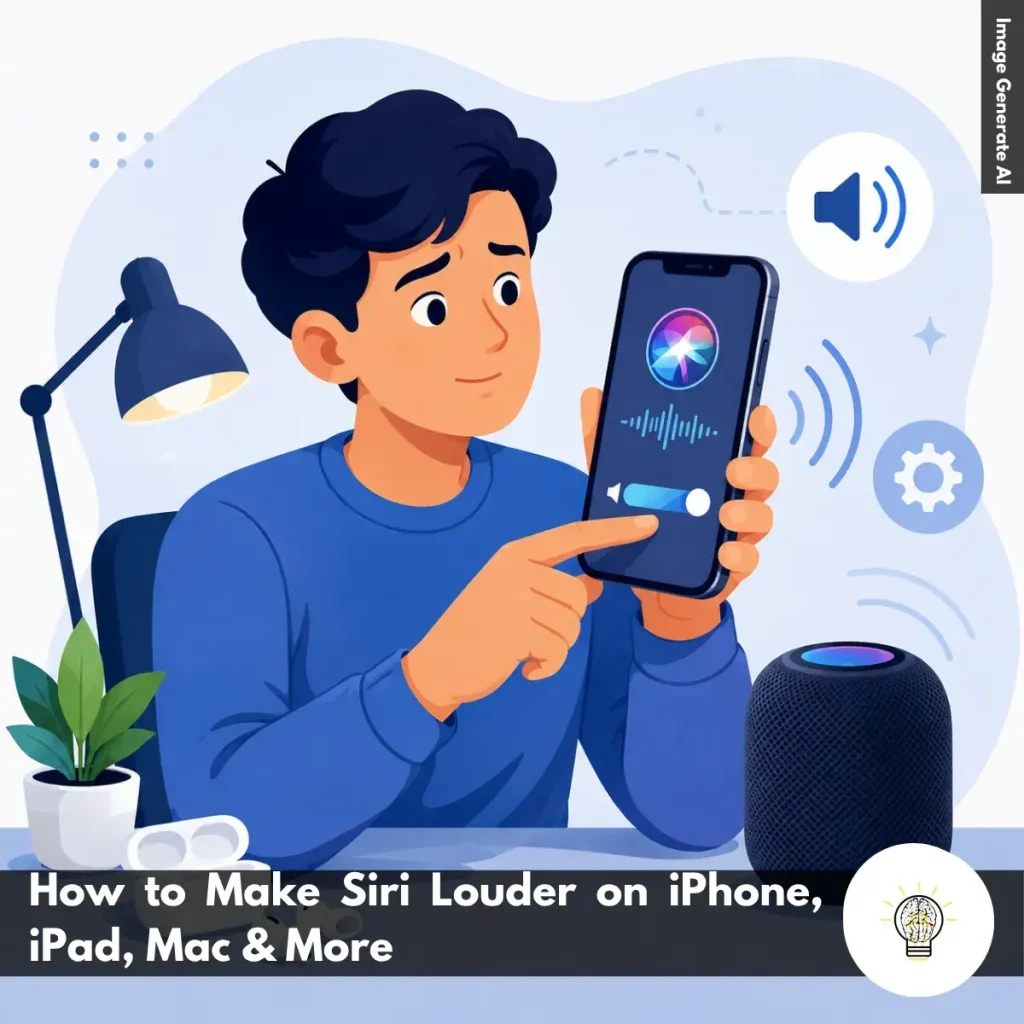
Ruminesia – Have you ever asked Siri a question only to barely hear the response? It often happens when you’re driving, wearing AirPods, following navigation directions, or simply trying to use Siri in a busy environment. A voice assistant is supposed to make things easier, but a low volume can quickly turn a simple task into a frustrating experience.
If you’ve been searching for How to Make Siri Louder, you’re definitely not alone. Many users assume there’s a problem with Siri itself, when in reality the issue is often tied to device-specific volume settings. The tricky part is that Siri’s voice doesn’t always follow the same volume controls as music, videos, or phone calls.
Interestingly, the solution can vary depending on whether you’re using an iPhone, iPad, Mac, AirPods, CarPlay, or even Apple Maps. Once you know where Siri’s volume settings are managed, adjusting them becomes surprisingly simple—and can make everyday interactions feel much smoother.
Key Highlights
- Siri volume is often separate from music and media volume settings.
- Adjust Siri’s volume while it’s speaking for the most reliable results.
- Voice commands can quickly increase Siri’s volume without opening settings.
- Device-specific settings may affect Siri differently on iPhone, Mac, and CarPlay.
- Navigation and CarPlay often use separate voice guidance volume controls.
- Sometimes improving Siri’s speaking rate helps more than increasing volume.
If Siri’s voice is too quiet, the good news is that you can usually fix it in just a few seconds. The exact method depends on the device or app you’re using, but in most cases, adjusting Siri’s volume while it’s actively speaking works best.
If you’re looking for how to make Siri louder on iPhone, these quick adjustments can help. Most of them take only a few seconds and can make Siri much easier to hear.
If you’re looking for how to make Siri louder on iPad, the good news is that you usually don’t need to change many settings. Most volume issues can be fixed with a few quick adjustments that take less than a minute.
When using Siri on a Mac, the voice volume is closely tied to your system’s audio settings.
In practice, many Siri volume issues on Mac happen because the wrong output device is selected, rather than the volume itself being too low.
Using Siri through AirPods is convenient, but the voice volume can sometimes feel lower than expected, especially outdoors or in busy environments.
Clear voice guidance is essential when driving, which is why Siri volume in CarPlay is adjusted slightly differently.
What many users don’t realize is that CarPlay often uses a separate voice guidance volume from music playback, so volume changes should be made while Siri is speaking.
If navigation instructions are difficult to hear, Apple Maps includes dedicated voice settings that can help.
Interestingly, navigation voice volume can behave independently from media volume, which is why music may sound loud while directions remain quiet.
HomePod gives you more direct control over Siri’s speaking volume, including voice-based adjustments.
Besides that, HomePod can automatically adapt Siri’s voice level based on background noise, which can make responses easier to hear in busy rooms.
When Siri reads messages and notifications aloud, volume settings can affect how clearly you hear incoming information.
Sometimes the issue isn’t volume at all. Slowing Siri’s speaking rate can make long messages significantly easier to understand, especially when listening through headphones.
Read more:
Frequently Asked Questions about Siri often focus on privacy, customization, voice commands, and everyday usability. Below are some of the most common Siri questions, along with concise and practical answers for Apple users.
You can change Siri’s voice by going to Settings > Apple Intelligence & Siri > Siri Voice. From there, choose different accents and voice options, including American, British, Australian, and more.
Once selected, your iPhone will automatically download the voice files over Wi-Fi. This allows Siri to sound more natural based on your preference.
Yes, Siri can handle several basic commands offline on supported iPhones. You can set alarms, open apps, control music, or adjust settings without internet access.
However, requests that need live information, such as weather updates or web searches, still require Wi-Fi or cellular data.
This usually happens because voice activation is disabled or the microphone is blocked. Check Settings > Apple Intelligence & Siri and make sure “Listen for ‘Hey Siri’” is turned on.
Besides that, avoid placing your iPhone face down or inside a thick case that may affect microphone detection. Restarting the device can also help fix temporary Siri issues.
To enable this feature:
Once enabled, Siri can read incoming messages aloud and let you reply hands-free.
Apple does not currently allow completely custom wake words for Siri. However, newer iOS versions let users shorten the phrase from “Hey Siri” to simply “Siri.” If you want more customization, you can use Vocal Shortcuts inside Accessibility settings to trigger certain actions using custom phrases.
You can delete Siri history directly from your iPhone settings. Go to Settings > Apple Intelligence & Siri > Siri & Dictation History, then choose the delete option. This removes stored voice recordings and Siri interaction history linked to your account. One thing many users overlook is that this can improve privacy management.
No, Siri does not continuously record private conversations. Your device only listens locally for the wake phrase like “Hey Siri” or “Siri.” Once Siri detects the trigger phrase, it begins processing your request. If preferred, you can disable voice activation entirely in the settings.
Activate Siri and say, “Learn how to pronounce my name.” Siri will guide you through a short pronunciation setup process. You’ll be asked to repeat your name, then select the pronunciation that sounds most accurate. Siri will save it automatically to your contact profile.
Yes, Siri can help locate a misplaced iPhone using other Apple devices like Apple Watch, HomePod, or iPad. Simply say, “Where is my iPhone?” to trigger the search. Even if the iPhone is in silent mode, it will still make a loud sound to help you find it quickly.
First, enable Siri access for WhatsApp in your iPhone settings. Open Settings > WhatsApp and turn on the “Use with Siri” option.
After that, specify WhatsApp directly in your voice command. For example, say “Send a WhatsApp message to Sarah” instead of only saying “Message Sarah.”
Sometimes, the difference between a frustrating Siri experience and a seamless one comes down to a simple volume adjustment. Whether you’re using an iPhone, AirPods, CarPlay, or a HomePod, knowing where Siri’s voice settings are managed can make everyday tasks feel much smoother and less distracting.
Interestingly, learning how to make Siri louder isn’t just about turning up the sound. It’s also about understanding how Siri behaves across different devices, apps, and situations. What many users don’t realize is that Siri often has separate volume controls, which is why the fix isn’t always as obvious as raising your media volume.
At the end of the day, voice assistants work best when they blend naturally into your routine. If you’ve discovered a useful Siri volume tip or run into a unique issue along the way, what was your experience? It’s often those small everyday discoveries that help other users solve the same problem faster.