Physical Address
304 North Cardinal St.
Dorchester Center, MA 02124
Physical Address
304 North Cardinal St.
Dorchester Center, MA 02124

Your Guide to the Latest in Tech
Your Guide to the Latest in Tech
ruminesia – Siri is designed to make everyday tasks on your iPhone faster and easier, but it can be frustrating when the voice assistant doesn’t respond the way you expect. Sometimes Siri won’t activate, ignores “Hey Siri,” or simply doesn’t work at all. If that’s happening, learning how to get Siri to work on your iPhone usually comes down to checking a few key settings and completing the initial setup correctly.
Many Siri issues are caused by simple things like disabled voice activation, incomplete voice recognition setup, or missing permissions in your device settings. In some cases, connection issues or outdated system software can also prevent Siri from responding properly.
The good news is that most of these problems are easy to fix. By enabling the right Siri settings, training the voice assistant to recognize your voice, and checking a few troubleshooting steps, you can get Siri working smoothly again on your iPhone.
Key Highlights
- Make sure Siri is enabled in Settings > Siri & Search before trying to use voice commands.
- Turn on “Hey Siri” or “Siri” voice activation so you can launch Siri hands-free.
- Complete the voice recognition setup to help Siri accurately recognize your voice.
- Use the Side or Home button shortcut if voice activation isn’t convenient.
- Ensure your iPhone has a stable internet connection, since Siri relies on Wi-Fi or mobile data.
- Check language, region, and iOS updates if Siri is not responding properly.
If Siri isn’t responding on your iPhone, the issue is often related to configuration settings rather than a hardware problem. Setting up Siri properly only takes a few minutes and ensures the voice assistant can recognize your voice, respond to commands, and work reliably. Follow the steps below to enable and configure Siri correctly.
Before using Siri, you need to confirm that the feature is enabled in your device settings. Start by opening the Settings app on your iPhone. Scroll down and tap Siri & Search (or Apple Intelligence & Siri, depending on your iOS version).
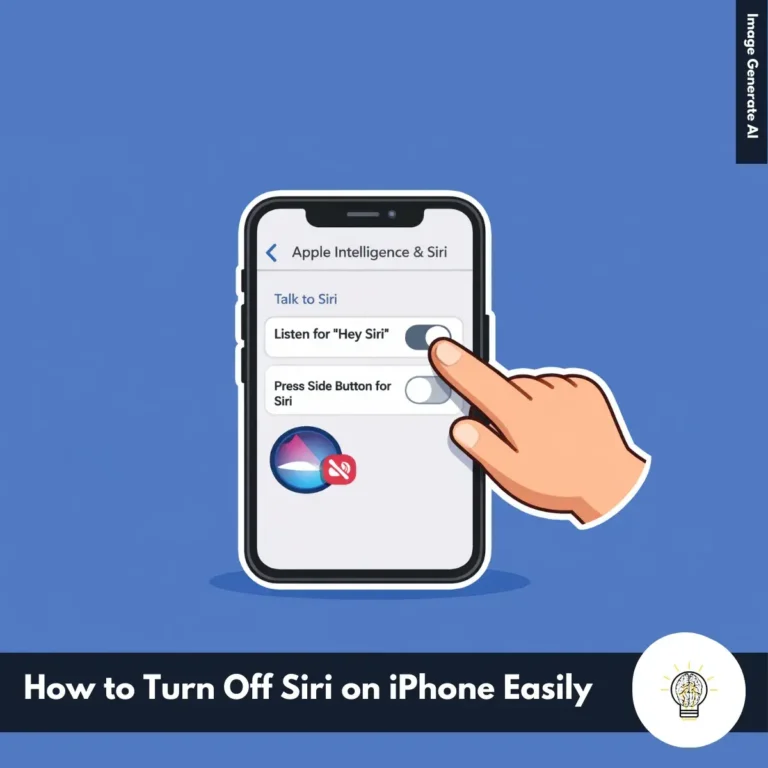
Next, tap Talk to Siri and enable voice activation by toggling Listen for “Hey Siri” or Listen for “Siri.” Newer iOS versions support both options.
You can also enable Press Side Button for Siri (or Press Home Button for Siri on older iPhone models). This allows you to manually activate Siri by holding the button instead of using voice commands.
To improve accuracy and privacy, Siri can learn to recognize your voice through a quick setup process. Follow these steps if prompted:
This step helps Siri respond specifically to your voice and improves recognition when you say “Hey Siri.”
If you prefer manual activation or often use Siri in noisy environments, enabling the hardware button shortcut can be helpful. To enable it:
Once enabled, you can press and hold the button to activate Siri and then speak your request.
After setup is complete, you can interact with Siri in several ways depending on your preference. Voice activation allows you to simply say “Hey Siri” or “Siri” followed by a request, such as asking about the weather or setting reminders.
Button activation works by pressing and holding the Side or Home button and then speaking your command.
If you prefer not to speak, you can also enable Type to Siri. To do this, go to Settings > Accessibility > Siri and turn on Type to Siri. This feature lets you type requests directly to Siri instead of using voice commands.
If Siri still does not respond after enabling it, a few basic checks can usually resolve the problem. Start by confirming that Siri is enabled in Settings > Siri & Search. Then try restarting your iPhone to refresh system processes.
You should also make sure your device is connected to the internet, as Siri requires either Wi-Fi or mobile data to function properly.
If problems persist, check whether your region settings, language configuration, or an active VPN connection might be affecting Siri’s availability. Updating your iPhone to the latest version of iOS can also fix compatibility issues.
Once Siri is set up, a few small adjustments can make it more convenient to use. On iPhones running iOS 17 or later, you can give multiple commands in sequence without repeating “Siri” before each request.
If you want to avoid accidental activations—such as during meetings—you can temporarily disable voice activation in the Siri settings. Placing your iPhone face down can also prevent “Hey Siri” from triggering unintentionally.
Read More:
Here are some Frequently Asked Questions about Siri to help clarify how Apple’s voice assistant works in everyday situations. These answers cover common questions users have when using Siri across different Apple devices.
Siri helps you perform everyday tasks using voice commands. You can ask Siri to send messages, make calls, set reminders, check the weather, control smart home devices, open apps, and search for information.
There are several ways to activate Siri depending on your device settings.
Once activated, simply speak your request.
Most Siri features require an internet connection because requests are processed through Apple’s servers. However, some basic tasks like opening apps, setting alarms, or adjusting certain device settings may work offline on newer iOS versions.
Yes, you can customize Siri’s voice and language in the settings menu. Apple provides several voice options, including different accents and languages depending on your region.
Yes, Siri works across multiple devices in the Apple ecosystem. You can use Siri on iPad, Mac, Apple Watch, AirPods, HomePod, Apple TV, and Apple Vision Pro.
You can disable Siri through the settings menu.
This will stop Siri from activating.
Yes, Siri can control compatible smart home devices through Apple HomeKit. You can use voice commands to turn lights on or off, adjust thermostats, or manage other connected home accessories.
Siri may not respond if voice recognition is disabled, the microphone is blocked, or your internet connection is unstable. Checking Siri settings and ensuring your device has a stable connection often resolves the issue.
Yes, Apple offers a Type to Siri feature for users who prefer typing.
You can then type commands instead of using voice input.
Siri only listens for the activation phrase like “Hey Siri” or “Siri” when the feature is enabled. Apple states that voice data is processed with privacy protections, and Siri does not continuously record conversations unless activated.
Getting Siri up and running usually only takes a few simple checks. Once you understand how to get Siri to work on your iPhone, most issues can be solved by enabling the right settings, completing the voice recognition setup, and making sure your device has a stable internet connection.
If Siri still doesn’t respond, basic troubleshooting—like restarting your iPhone, checking language or region settings, or updating iOS—can often fix the problem quickly. These small adjustments help ensure the voice assistant works smoothly whether you’re asking questions, setting reminders, or controlling everyday tasks with voice commands.
Now that you know the key steps, try setting up Siri on your iPhone and see how it improves your daily workflow. If you’ve run into a specific issue or discovered a helpful tip, feel free to share your experience with others.